
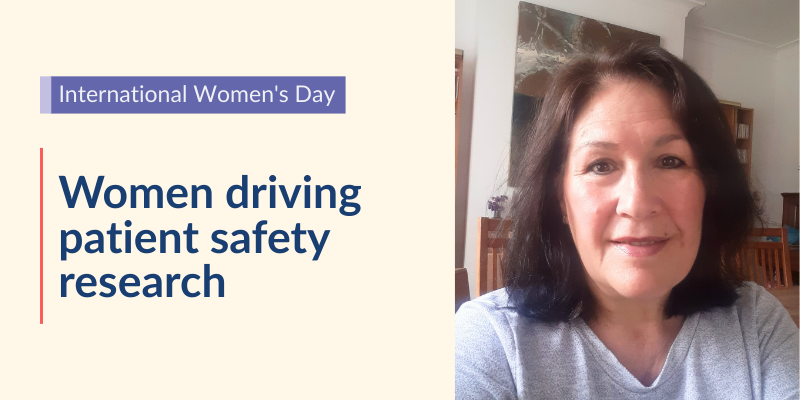
Women Driving Patient Safety Research: Meet Elizabeth Monaghan
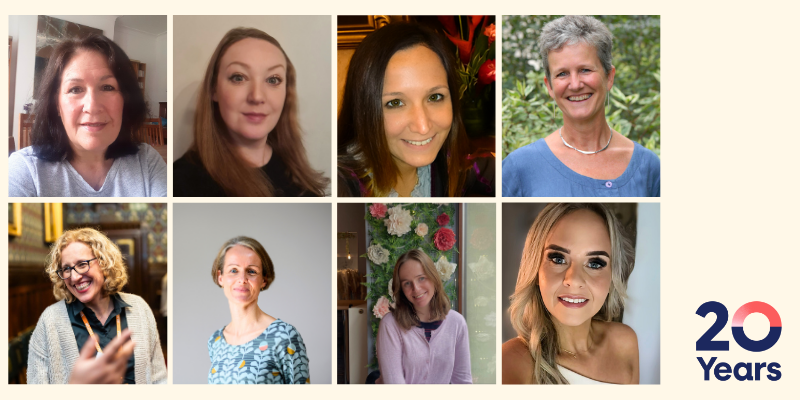
On International Women’s Day 2026, we are celebrating the women who are driving innovation and shaping the future of patient safety research across our team. Their expertise, leadership, and lived experience are helping to transform how we understand risk, deliver safer care, and ensure that patient voices are meaningfully embedded in research.
We are delighted to spotlight one of our public contributors, Elizabeth Monaghan, who plays a key role in our preventing suicide and self-harm research theme.
Read Liz’s story in her own words below.
Meet Elizabeth Monaghan
Public Contributor and Public and Community Involvement and Engagement (PCIE) member for preventing suicide and self-harm research theme at the NIHR GM PSRC
I was one of that 70s generation of grammar school girls who could choose the humanities and, hard to believe now, ignore the sciences completely. I had no idea how that would change. As a single mum of four teens, I gave up work and study to look after my daughter as she went through an awful period of mental illness. For two years, I was her unpaid carer, with no access to public funds or any support from education or social care, and inadequate health care. During that time, we went through several blue light emergencies which were traumatic and disempowering. In desperation I phoned a parents helpline at YoungMinds and that was the start of my public involvement in research.
As part of a group of other parent/carers we were invited to brainstorm possible research questions at the beginning of the UK HeadStart program. Over a couple of hours we thought about ‘early interventions’ and came up with almost 200 possible questions to be themed for researchers! I learned how important it is to include people living with illness and their carers in research design.
At the same time, I was invited to become an Expert by Experience with the CQC and accompanied inspection teams to secure wards and care homes where people with complex mixes of mental illness, learning disability, autism and physical health needs were living. I saw and heard first-hand how services struggled to create safe environments and effective care for this very vulnerable population.
Some time later, and quite by chance, I attended a poetry workshop in Manchester for people living with self-harm and suicidality and their carers, and met some of the NCISH research team from the University, including the wonderful Dr Leah Quinlivan. She invited me to join a new Lived Experience group. This group, called MS4MH-R (Mutual Support for Mental Health in Research) has evolved over ten years or so and I’ve been privileged to be involved in many tasks throughout the research process. Sometimes demanding intellectually, always demanding emotionally, this work has proved to be a life-changer for me. I’m also a MH rep with the NIHR Greater Manchester Patient Safety Research Collaboration where we’re developing understanding of how to meaningfully and respectfully include people in research who are often missing.
You may not realise it, but being involved in meaningful PPIE can be empowering for individuals and for the communities they are part of. By sharing our experiences our voices have grown in confidence, some of our group have areas of influence and action beyond their research involvement, networks of support, but, for others, just being welcomed as part of the group is enough to bring a sense of self-worth, recognition that your worst experiences can help bring about positive change. PPIE can be therapeutic and lead to self-development, perhaps for some of us even creating some sort of post-traumatic growth? Our researchers at Manchester University are leading the way in co-production, going beyond the official guidelines. The process may be time-consuming, and can bring previously unrecognised assumptions, ambiguities, and tensions out into the open. Nobody said it was easy!
Being part of the NIHR GM PSRC has offered countless opportunities for meaningful involvement through which I’ve been able to develop an understanding of how public involvement in research can shape policy, influence funding, improve safety and awareness in service provision across the mental health landscape and make real differences to people’s experiences of care during some of their worst times.
So, when I was asked to write this blog for IWD, I thought hard about why women’s involvement in patient safety research is needed.
Prof Neena Modi’s 2022 BMA blog clearly describes the systemic inequality in our healthcare systems, not designed with women’s needs and preferences in mind: from heart attacks to mental health, women’s needs are different.
Women still are under-represented in some areas of medical research due in part to fewer women researchers and historical and default biases, so conditions such as mental illness and migraine which affect women more are underfunded.
And, in 2026, 60% of unpaid carers are still women, as are the majority of paid carers, (81%). Including these women in patient safety research is fundamental – they experience higher rates of stress, anxiety and isolation – and they need to be adequately recompensed and practically facilitated to enable their participation as 30% of them receive no Carer’s Allowance.
These factors highlight the need for all health research to include women meaningfully. Their lived experiences of systemic exclusion, bias and inequality can expose important, often hidden, aspects of patient safety realities –including those unquantifiable costs and traumas of life – abuses (women are significantly more likely to experience abuse than men1), everyday sexism (half of all women have experienced incidents1), economic inequalities (84%men work full-time but only 60% women2) and childcare and caring burdens3 which may last years.
I was reminded of Ann Oakley’s 1974 exposition of the gendered burden of unpaid domestic and emotional labour borne by women and, despite some significant societal shifts in the subsequent 50 years, I frequently hear women’s stories which show they still carry that weight. Their voices must be heard in research.
- https://www.ons.gov.uk/peoplepopulationandcommunity/crimeandjustice/bulletins/domesticabuseinenglandandwalesoverview/november2025#headline-statistics-on-domestic-abuse
- https://www.ons.gov.uk/employmentandlabourmarket/peopleinwork/earningsandworkinghours/bulletins/genderpaygapintheuk/2025#main-points
- SeedatS, Rondon M. Women’s wellbeing and the burden of unpaid work BMJ2021;374:n1972 doi:10.1136/bmj.n1972 available online at: https://www.bmj.com/content/374/bmj.n1972
The views expressed are those of the author(s) and not necessarily those of the NIHR or the Department of Health and Social Care.
Women driving patient safety research
Related
[related-posts-thumbnails]



The University of Manchester
Oxford Rd
Manchester
M13 9PL
UK
Site hosted by The University of Manchester.
0 Comments