
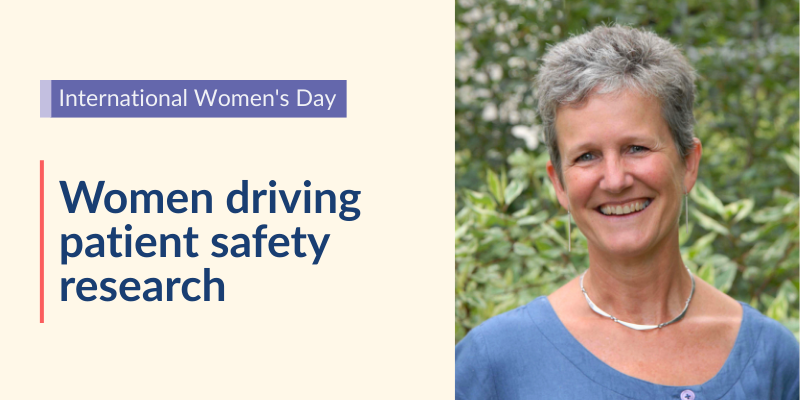
Women Driving Patient Safety Research: Meet Nicola Mackintosh
On International Women’s Day 2026, we are celebrating the women who are driving innovation and shaping the future of patient safety research across our team. Their expertise, leadership, and lived experience are helping to transform how we understand risk, deliver safer care, and ensure that patient voices are meaningfully embedded in research.
We are delighted to spotlight one of our research leads, Prof Nicola Mackintosh, who co-lead our Enhancing Cultures of Safety research theme. She is a Professor in Social Science applied to Health at the University of Leicester, where she also serves as the Deputy Research Group Lead for the SAPPHIRE group.
Read more about Nicola below.
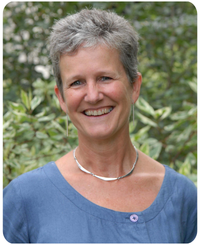
Meet Nicola Mackintosh
Professor of Social Science applied to Health at the University of Leicester
1 – Tell us a bit about yourself and your research background.
I have a background in critical care nursing. After clinical practice, I moved into teaching and then took my first research post in 2003, working on an evaluation of interprofessional education, and loved it! My next research post was a patient safety research project, working across maternity and emergency care; I found the work so interesting I have stayed in this field ever since. Between 2008 and 2012 I worked in the NIHR King’s Patient Safety and Service Quality (PSSQ) Research Centre, leading ethnographic research exploring the management of complications in maternity and acute care. During this time, I also completed my PhD which examined the construct of ‘rescue’ and relationships between organisational systems, department and individual level processes in managing acute illness. This period cemented my passion for ethnography as a valuable approach for both patient safety research and improvement science.
2 – What inspires you in your role, and who has influenced your journey in research or healthcare?
I draw on medical sociology for my research and have found some seminal work (e.g., Howard Becker, Charles Bosk, Anselm Strauss) really helpful for bringing new insights to the field of patient safety. I like the way sociology shifts attention away from individual behaviours to socio-cultural, professional and organisational influences on everyday practice. I also love reading ethnographic writing. I value the way ethnographic enquiry explores the ordinary and the mundane to see what is taken account of and what stays hidden under the radar on a daily basis. I think having both a clinical and academic background has enabled me to see different perspectives and helped me to bridge disciplinary boundaries.
3 – What are you currently working on and how does your work contribute to improving patient safety?
My current research explores: how best to enable patients and families, and staff teams to contribute the management of escalation of care in different settings; how to enable cultures of safety in everyday practice; and the role of coordination work in ensuring safe care.
4 – From your experience, what strengths or perspectives do women bring to patient‑safety research that enhance its quality or relevance?
I know so many inspiring women working in patient safety research who push boundaries intellectually, approach their work creatively and compassionately, demonstrate passion for and actively contribute to policy and practice improvement, whilst demonstrating an ethics of care for their teams and those they are researching with.
Voices for Safety Podcast
Listen to our podcast episodes with Prof Nicola Mackintosh to find out more about her work:
Women driving patient safety research

The views expressed are those of the author(s) and not necessarily those of the NIHR or the Department of Health and Social Care.
Related
[related-posts-thumbnails]



The University of Manchester
Oxford Rd
Manchester
M13 9PL
UK
Site hosted by The University of Manchester.
0 Comments