
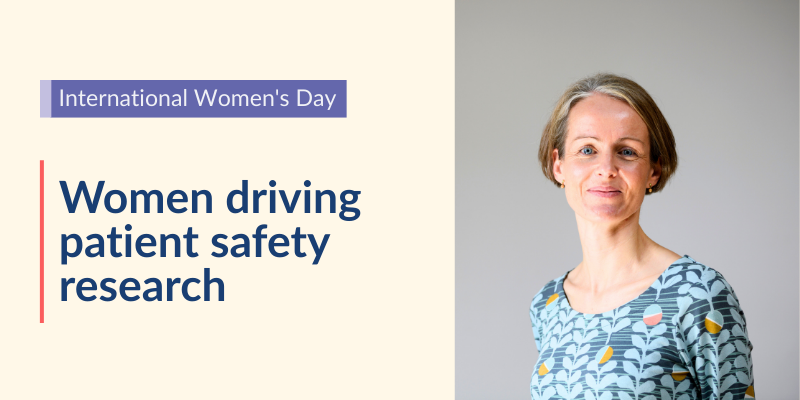
Women Driving Patient Safety Research: Meet Natalie Armstrong
On International Women’s Day 2026, we are celebrating the women who are driving innovation and shaping the future of patient safety research across our team. Their expertise, leadership, and lived experience are helping to transform how we understand risk, deliver safer care, and ensure that patient voices are meaningfully embedded in research.
We are delighted to spotlight one of our research leads, Prof Natalie Armstrong, who co-lead our Enhancing Cultures of Safety research theme. She is a Professor of Health Services Research and Executive Dean for the School of Health & Medical Sciences at City St George’s, University of London. Natalie is also an Honorary Professor at the universities of Manchester and Leicester. Her work uses sociological ideas and methods to understand health and illness, and to tackle problems in the delivery of high-quality healthcare.
Read more about Natalie below.
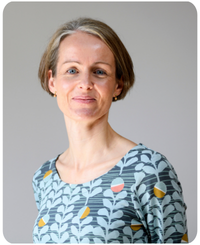
Meet Natalie Armstrong
Professor of Health Services Research at City St George’s, University of London
1 – Tell us a bit about yourself and your research background.
I’m a Professor of Health Services Research, with a background in medical sociology and qualitative methods. My work uses sociological ideas and qualitative methods to understand issues and challenges in the delivery of high-quality healthcare and seek to overcome these. Originally trained in sociology departments, I am committed to applied research and the practical impact of social science learning within healthcare, quality improvement, and patient safety. I have worked across a range of health and care contexts, and have particular interests in women’s and children’s health, preventative healthcare, and overdiagnosis/overtreatment. My work has involved extensive interdisciplinary collaboration with both clinical and non-clinical colleagues, which I’ve greatly enjoyed and learned from.
2 – What inspires you in your role, and who has influenced your journey in research or healthcare?
The opportunity to think deeply and in a nuanced way about quality improvement and patient safety, drawing on my medical sociology and qualitative methods background. Many of the challenges in these areas are complex and deep rooted – so called ‘wicked problems’ – and are not amenable to quick fix solutions. Working closely with relevant stakeholders in policy and practice to appreciate this complexity and think about how to address it is very rewarding. I’m inspired by people like Mary Dixon-Woods, who I worked with for many years at the University of Leicester, for their championing of social science and qualitative methods in this space. I’m also inspired by my two co-theme leads, Carolyn Tarrant and Nici Mackintosh, with whom I’ve had endlessly fascinating discussions!
3 – What are you currently working on and how does your work contribute to improving patient safety?
My main focus at the moment is a project looking at the role of Non-Executive Directors in supporting patient safety, particularly in relation to maternity and neonatal care. The safety of maternity and neonatal care delivered by NHS Trusts has been under sustained scrutiny, given numerous high-profile scandals and investigations. A frequent finding is that poor cultures of safety within healthcare organisations may mean that staff do not feel able to speak up about their concerns, that systems and processes for monitoring safety are not working well, and/or that learning from incidents and adverse events is suboptimal.
A key recommendation from investigations is that Trust boards need to be better sighted on the performance and governance of maternity and neonatal services within their organisations. An important but understudied role within a Trust board is that of the Non-Executive Director (NED). The Patient Safety Commissioner, Henrietta Hughes, has drawn specific attention to the role of NEDs and positioned them as having an important role in both observing the culture of their organisations and making recommendations for change, but we don’t know very much about their experiences of actually doing this and what might help them do so more effectively.
Our project is using documentary analysis to explore how the NED Maternity & Neonatal Safety Champion role is envisaged in policy, how their contribution is imagined, and how they are made responsible for safety through the role specification. We’re then using qualitative interviews with current NEDs to explore how they experience and enact the role, who they work with and how, and any concerns they have about the role/responsibilities.
Women driving patient safety research

The views expressed are those of the author(s) and not necessarily those of the NIHR or the Department of Health and Social Care.
Related
[related-posts-thumbnails]



The University of Manchester
Oxford Rd
Manchester
M13 9PL
UK
Site hosted by The University of Manchester.
0 Comments