
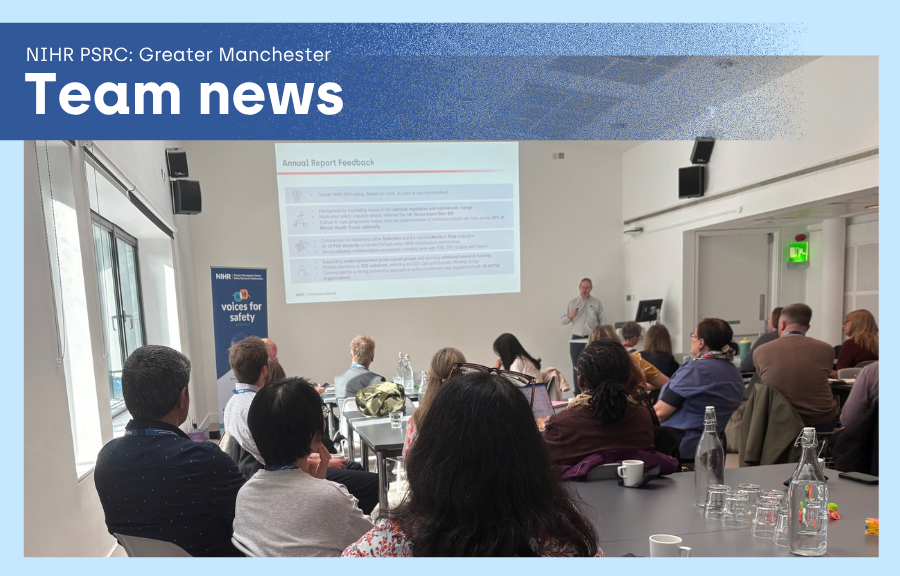
Turning Research into Impact: Highlights from the NIHR PSRC: Greater Manchester September 2026 Team Meeting
On 15 September 2026, colleagues from across the NIHR Patient Safety Research Collaboration: Greater Manchester came together for a team meeting focused on impact, collaboration, professional development and inclusive research practice. The day combined strategic updates, research showcases and practical learning, highlighting the breadth of work taking place across the collaboration.
Celebrating Progress and Looking Ahead
The day opened with an update from Professor Darren Ashcroft, who reflected on positive feedback from the collaboration’s annual report. Particular recognition was given to work influencing national policy and practice, including medication safety research that informed the UK Government Data Bill and the Culture of Care programme’s impact on reducing the use of ineffective suicide risk prediction tools.
Looking ahead, the focus is firmly on maximising the impact and value of research, ensuring findings influence practice, improve patient outcomes and continue to deliver benefits beyond the lifetime of individual projects.
Turning Research into Policy Change
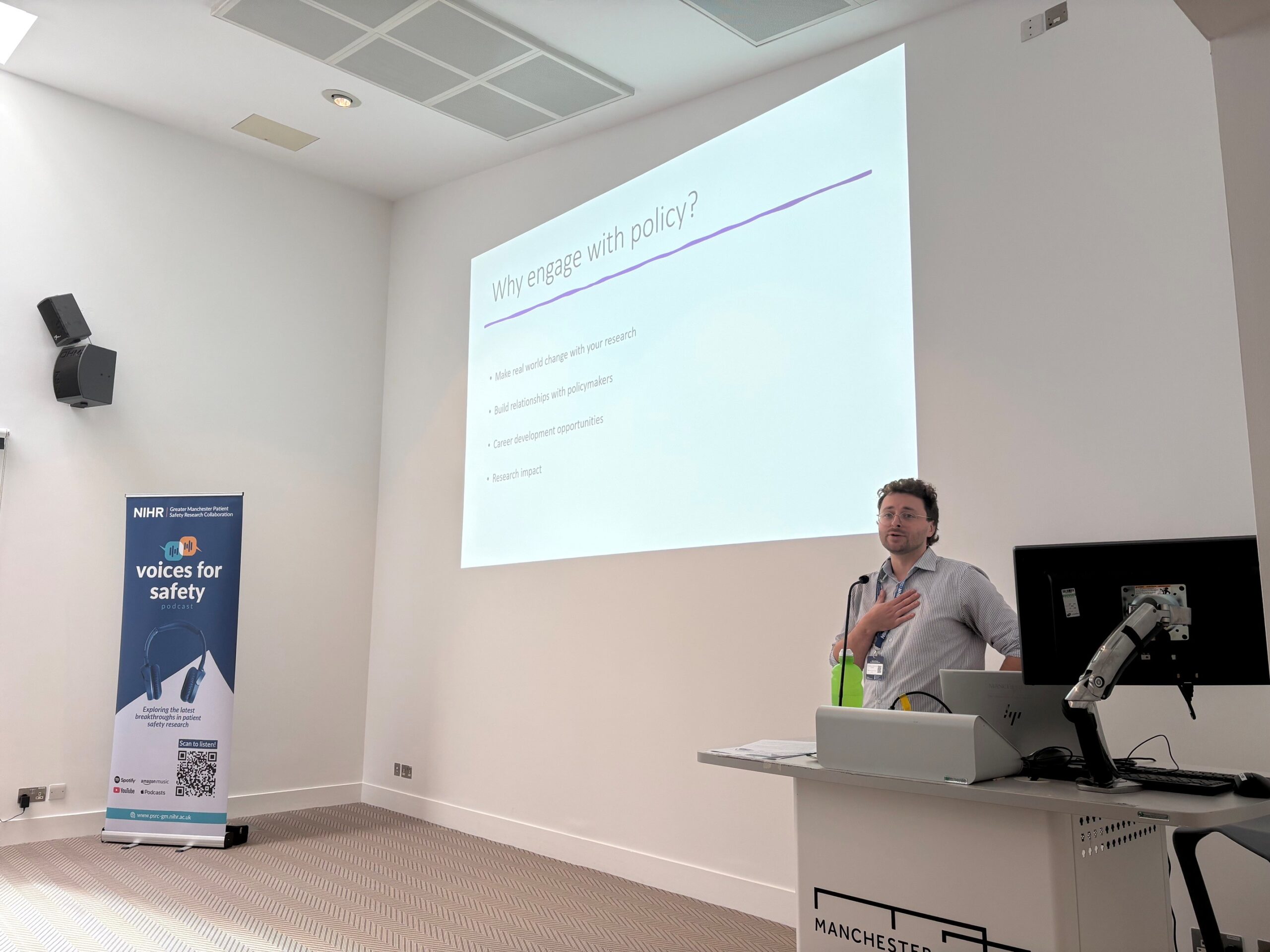
Callum Wood from Policy@Manchester highlighted the importance of engaging policymakers to ensure research creates real-world change. Researchers were encouraged to present evidence that is timely, concise and actionable, and to consider opportunities such as government consultations, Select Committee inquiries, Areas of Research Interest and direct engagement with policymakers. A key message from the session was that researchers often have valuable expertise that can help shape policy decisions.
Supporting Future Research Leaders
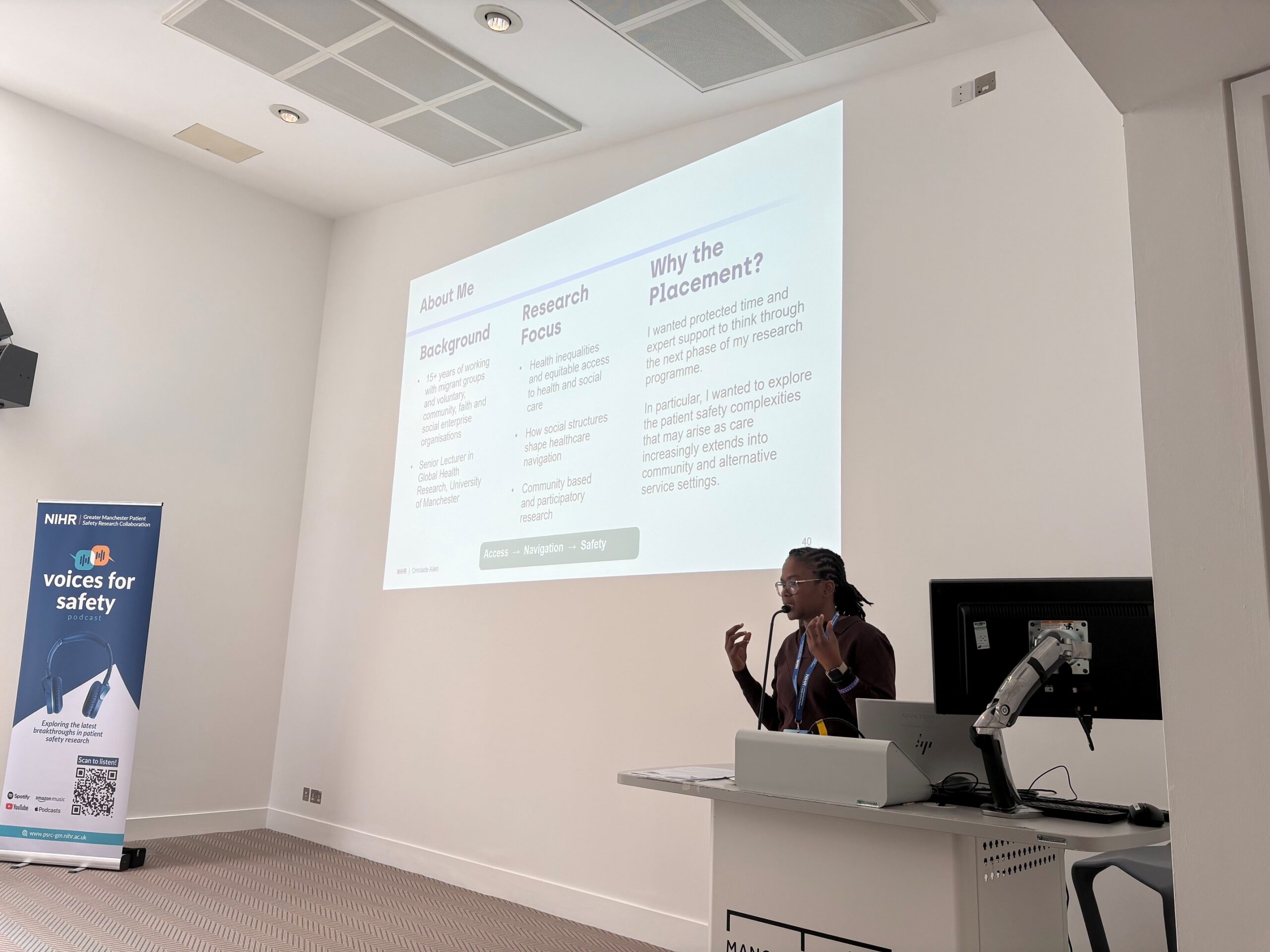
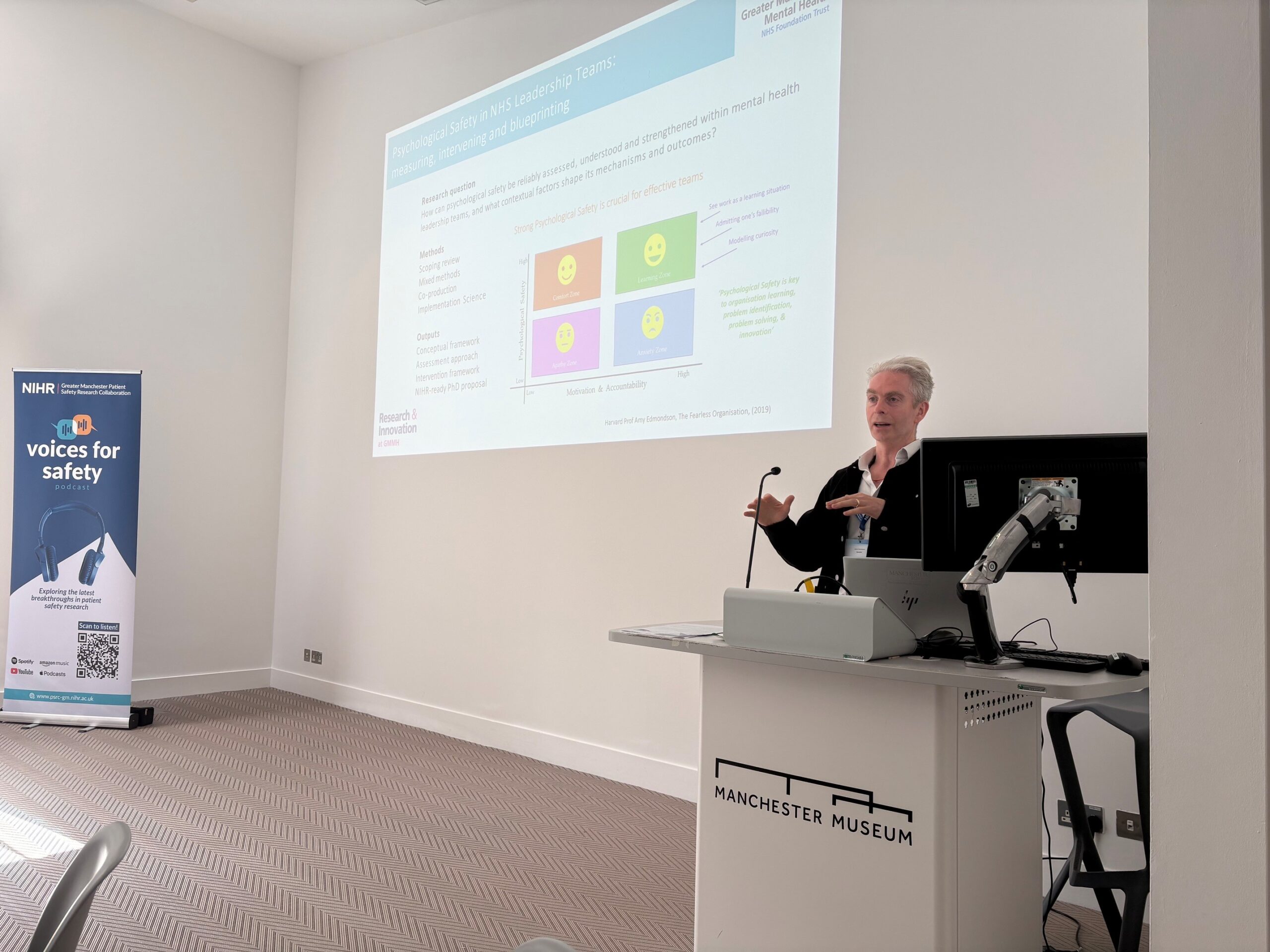
A major feature of the day was the showcase from the first cohort of Patient Safety Research Development Award holders. Presentations demonstrated how protected research time, mentorship and networking opportunities have helped colleagues strengthen research skills, refine career goals and develop future funding applications.
Highlights included:
- John Sainsbury’s work exploring psychological safety within mental health leadership teams.
- Neetu Bansal’s development of a future research programme focused on safer opioid prescribing and patient outcomes.
- Omolade Allen’s work on health inequalities, community-based care and systems thinking.
- Rachel Daly’s research into improving recognition and diagnosis of inducible laryngeal obstruction.
- Rachel Lewis’s reflections on developing expertise in person-centred care, implementation science and patient safety.
- Shaun Morgan’s work investigating drug error reduction software in adult critical care.
Read more about our first cohort here: NIHR PSRC: Greater Manchester | Empowering Future Leaders in Patient Safety Research: Introducing the GM PSRC Development Award Holders.
Academic Career Development Update
Dr Richard Keers provided an update on Academic Career Development activities. Progress included the successful completion of the first Development Award cohort, the launch of a second cohort, growing peer support networks and encouraging results from the Research Impact Survey, which has already captured publications, conference presentations, grants, public involvement activities and new collaborations.
Future plans include workshops on behavioural science, SafetyNet seminars, a public speaking development event and a 2027 Researcher Networking Day focused on career planning and progression.
Understanding Implementation Science
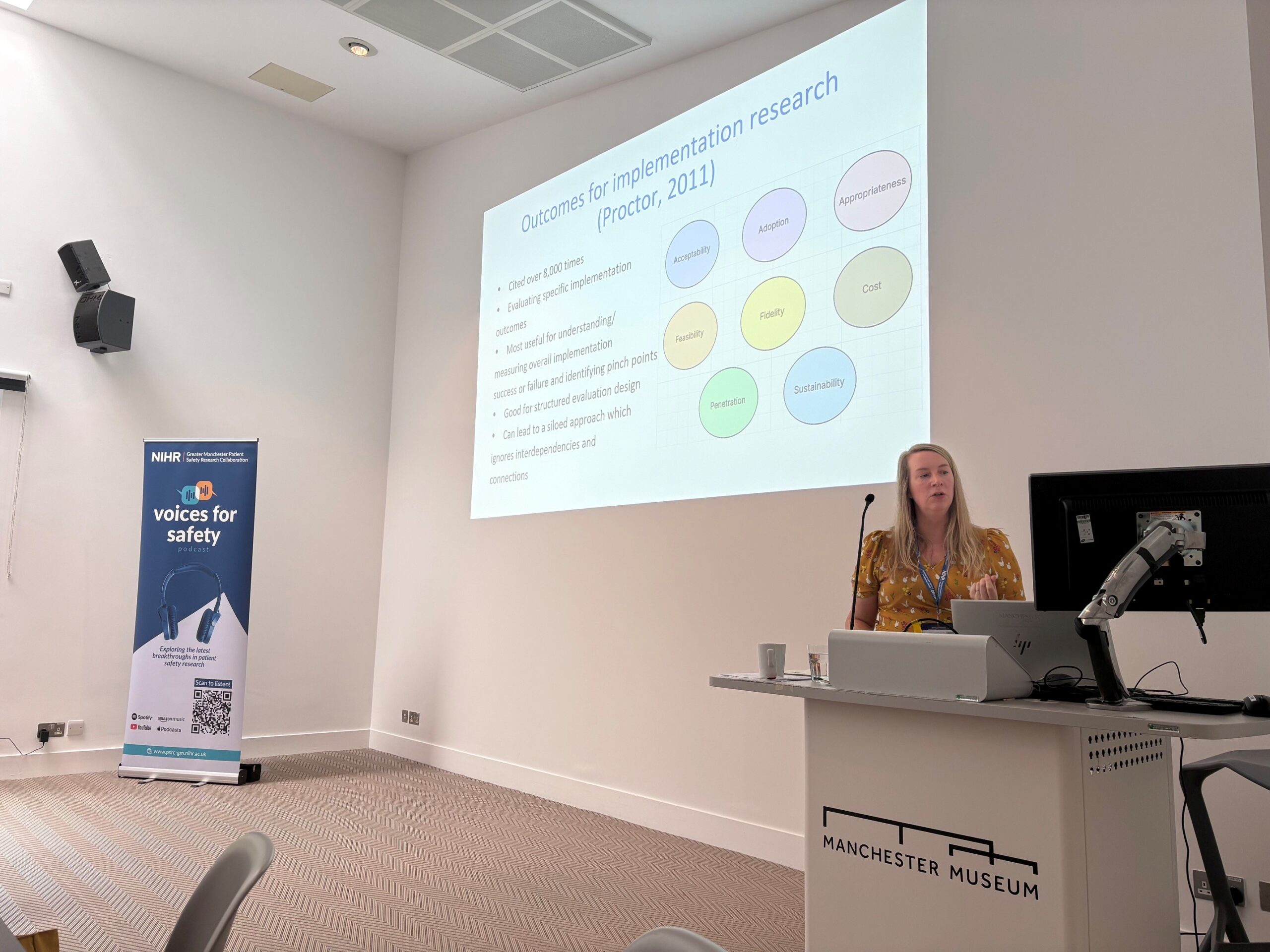
Dr Laura Sheard delivered an engaging introduction to implementation science and its relationship with qualitative research. The session explored how frameworks can help researchers understand context, evaluate implementation and support change in practice, while also highlighting the importance of remaining open to complexity and unexpected findings. Researchers were encouraged to select approaches that best answer their research questions rather than relying on familiar frameworks by default.
NIHR Brand Refresh
Melissa Lima introduced the NIHR’s 2026 brand refresh, which includes new logos, colours, typography and templates. Guidance was also provided on acknowledging PSRC funding and accessing communications support to help maximise research impact and visibility.
Access our branding and resource page here: NIHR PSRC: Greater Manchester | Brand and resources
Understanding Neurodiversity and Inclusive Research
One of the most interactive sessions of the day was delivered by Dr Penny Lewis and Dr Louise Gorman, focusing on neurodiversity and creating inclusive research environments. The session explored ADHD, autism and dyslexia, highlighting both the challenges individuals may face and the strengths that neurodivergent people bring to research and workplaces.
Practical advice included:
- Using clear, accessible communication.
- Sharing information in advance.
- Providing flexible ways for people to participate.
- Designing materials that reduce cognitive overload.
- Embedding inclusivity throughout the research lifecycle.
The session reinforced a key message: difference is not deficit, and inclusive research benefits everyone.
Advancing Suicide Prevention Research
Dr Leah Quinlivan provided an update from the Preventing Suicide and Self-harm theme, focusing on the shift from risk prediction tools toward personalised, collaborative safety planning. The presentation highlighted the national impact of the Culture of Care programme and the development of Jay’s personalised safety planning toolkit, which has been co-produced with people with lived experience to ensure it is practical, accessible and meaningful.
The session demonstrated how patient safety research can directly influence policy, service delivery and clinical practice while remaining grounded in the experiences of those it aims to support.
Looking Ahead
The September Team Meeting showcased the strength, diversity and impact of research taking place across NIHR PSRC: Greater Manchester. From supporting future research leaders and influencing policy to promoting inclusion and improving patient safety, the day highlighted the collaboration’s shared commitment to turning research into meaningful change.
Thank you to all speakers, contributors and attendees who made the event such a valuable opportunity for learning, discussion and collaboration. As the collaboration moves into the next phase of its programme, these conversations will continue to help shape research that improves outcomes for patients, services and communities.



The University of Manchester
Oxford Rd
Manchester
M13 9PL
UK
Site hosted by The University of Manchester.
Recent Comments