
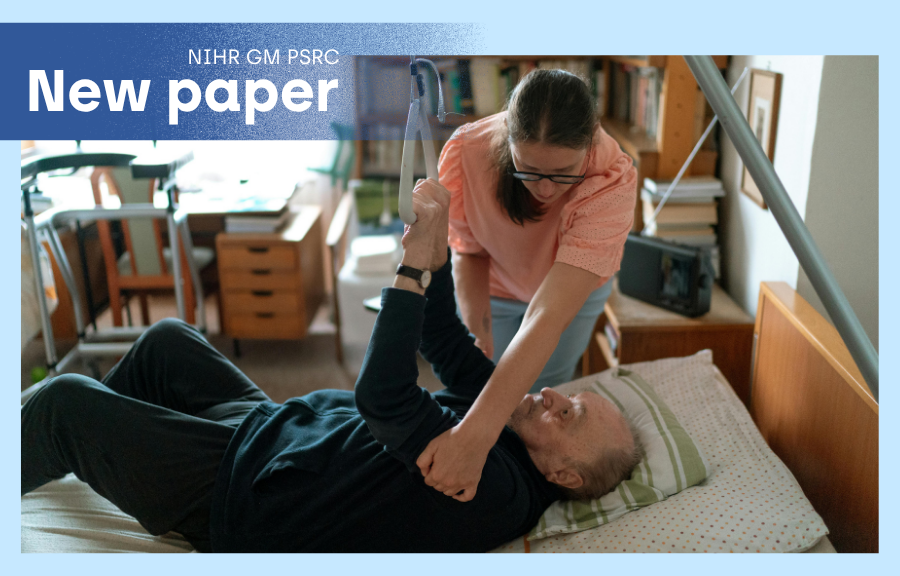
New study examines how safety is delivered in NHS virtual wards
Virtual wards, also known as hospital at home, are increasingly being used across the NHS to support people who would otherwise need hospital care to receive treatment and monitoring at home. A new NIHR-funded study explored how safe care is delivered in virtual wards, highlighting the often unseen work carried out by patients and carers as they undertake key elements of risk-work previously held by clinicians.
The findings show that virtual wards can provide a safe alternative to hospital care for some patients, allowing people to recover at home while still receiving clinical oversight. However, patients and carers often take on more practical and emotional responsibility than may be recognised as they assume duties that would normally be carried out by clinicians in hospital settings. This includes monitoring symptoms, managing equipment and responding to signs of deterioration, especially overnight or outside normal working hours.
The study, published in the journal BMJ Quality & Safety and led by researchers at The University of Manchester, is funded by the NIHR Greater Manchester Patient Safety Research Collaboration (GM PSRC) and the NIHR Applied Research Collaboration Greater Manchester (ARC-GM).
Using qualitative methods, including observation work and interviews with patients and carers, the researchers evaluated virtual wards services across four sites in North-West England. Their findings show that safety in virtual wards does not rely on technology alone, but is strongly shaped by the relational and emotional support provided to patients, carers and clinicians.
Dr Kelly Howells, Research Fellow at The University of Manchester and the NIHR GM PSRC, said:
“Virtual wards can help people receive acute care safely at home, but our study shows safe care depends on more than technology.
“Patients, carers and clinicians all play a role in managing risk, with patients and carers often taking on important practical and emotional responsibilities, particularly outside normal working hours. Health services need to recognise and better support this work.”
Suggestions and recommendations
The researchers suggest that hospital at home services that combine technology with in‑person home visits could help make care safer, more flexible, and accessible for a wider range of patients. Recognising and supporting the work undertaken by patients and carers is essential to ensure virtual wards are safely delivered.
As virtual wards expand as a key component of NHS policy to shift acute care from hospital to community settings, practice must ensure there is space for relational and training support for clinicians, patients, and carers so that remote acute care can be safely implemented across health systems.
The paper Shifting boundaries of risk-work in virtual wards in North-West England: a multisite qualitative evaluation is available here. DOI https://doi.org/10.1136/bmjqs-2025-020002
Virtual wards research project
This study builds on earlier work by the NIHR GM PSRC and ARC-GM exploring virtual wards through the perspectives of patients, carers and staff, helping to deepen understanding of how virtual ward services operate in practice.
Related
[related-posts-thumbnails]



The University of Manchester
Oxford Rd
Manchester
M13 9PL
UK
Site hosted by The University of Manchester.
0 Comments